Course description

Project management involves planning, organizing, and controlling project activities to achieve specific goals within an agreed timeline and budget. It helps businesses coordinate teams, manage resources, identify risks, and monitor progress. Students can develop these skills through real-time Project Management training, which covers project planning, execution, monitoring, and completion.

Why Choose Project Management as a Career:

Project management offers opportunities to work across IT, healthcare, finance, construction, and business operations. Learning project coordination, stakeholder communication, resource allocation, and risk management can help students prepare for different professional roles. Learners can also explore Agile and Scrum methodologies to understand how teams organize tasks and deliver projects effectively.

The Benefits of Project Management Training:

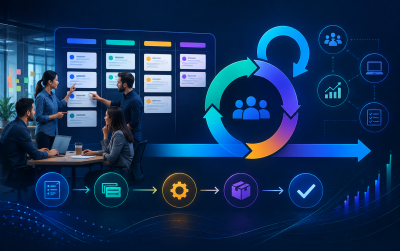
A project planning and execution course helps learners understand how to define objectives, prepare schedules, allocate resources, track milestones, and manage project risks. Practical exercises and business case studies help students connect management concepts with workplace situations. Explore project lifecycle and management training to learn about the different stages involved in successful project delivery.

Does Agile Project Management Improve Teamwork:

Agile project management encourages collaboration, continuous feedback, flexible planning, and regular progress reviews. Scrum practices such as sprint planning, daily meetings, and retrospectives help teams organize work and respond to changing requirements. Students can develop their understanding through Agile Scrum certification-oriented training and learn how Agile frameworks are applied to real-world projects.

What Career Opportunities Are Available After Project Management Training:

Project management knowledge can support career paths such as project coordinator, project manager, PMO executive, operations manager, and business analyst, depending on qualifications and experience. Developing leadership, documentation, scheduling, and reporting skills can help learners prepare for professional responsibilities. Students can explore professional training and internship programs to discover additional learning opportunities across management and technology fields.


What will i learn?

  • Introduction to Project Management
  • Project Planning and Goal Setting
  • Project Life Cycle Management
  • Project Scope and Requirement Management
  • Project Scheduling and Timeline Development
  • Resource Allocation and Team Management
  • Budget Planning and Cost Control
  • Risk Identification and Risk Management
  • Agile Project Management Methodologies
  • Scrum Framework and Sprint Planning
  • Project Quality Management
  • Project Documentation and Reporting
  • Problem-Solving and Decision-Making
  • Project Execution and Delivery
  • Project Closure and Performance Evaluation

Requirements

  • No technical background is necessary to get started
  • Familiarity with daily computer applications
  • Ability to organize tasks and activities
  • Interest in planning and coordinating projects
  • Willingness to learn scheduling and budgeting techniques
  • Basic understanding of workplace responsibilities
  • Ability to follow instructions and meet deadlines
  • Interest in using project tracking tools
  • Openness to feedback and new ideas
  • Willingness to handle challenges and changing priorities
  • Ability to communicate with team members
  • Motivation to develop professional management skills

Frequently asked question

Students choose Project Management to develop leadership, planning, communication, and problem-solving skills. It offers opportunities to coordinate teams, manage resources, and work across different industries.

Students can explore InternsHub's training programs to learn project management concepts, methodologies, and practical skills. Review the syllabus and available learning support to see whether the course matches your career goals.

The main reason is to learn how to plan tasks, manage time and resources, coordinate teams, control risks, and complete projects according to business requirements.

A beginner-friendly course should cover project planning, scheduling, budgeting, risk management, team coordination, and methodologies such as Agile, Scrum, and Waterfall.

Project Management helps IT teams coordinate development tasks, manage deadlines, allocate resources, handle risks, and deliver software or technology projects according to requirements.

Yes, students can learn the fundamentals without a technical background. Some specialized IT project management roles may require additional knowledge of software development or technology.

59999₹

Lectures

0

Skill level

Beginner

Expiry period

Lifetime

Certificate

Yes

Share this course

Related courses

FREE Book a Webinar